
How to start journaling (and actually keep going)
20 October 2026 · 4 min read
Forget the perfect first page. Five simple ideas to make journaling stick.
Forget the perfect first page
A new notebook can feel full of possibilities and strangely difficult to begin. You might imagine beautiful handwriting, thoughtful reflections and a daily routine that never slips. Then a busy week happens, and the blank pages start to feel like something you have failed at.
A journal is not a performance. It can hold a messy sentence, a shopping list, an unfinished idea and something you are grateful for. The point is to give your thoughts a place outside your head. Start with a page you are willing to use, rather than one you are afraid to spoil.
1. Choose a small starting point
For your first entry, try three sentences: ‘Today I feel…’, ‘One thing on my mind is…’ and ‘Something I appreciated was…’. There is no need to explain your whole life. Write the first honest answer that comes to mind, even if it seems ordinary. You can stop after those sentences.
If reflection feels awkward, begin with facts instead. Where did you go? Who did you speak to? What took more energy than expected? Describing the day often makes it easier to understand how you felt about it. Your entries can grow naturally, but they never have to become long.
2. Give your journal a place in the day
‘I will write more’ leaves a lot to chance. ‘I will open my journal after my morning coffee’ gives you a moment to recognise. Choose something that already happens most days. If your mornings are rushed, the end of lunch or the last few minutes before bed might fit better.
Make the practical part easy. Keep the notebook somewhere you actually sit, with a pen ready to use. If you carry a bag, tuck it beside the things you reach for regularly. You do not need candles, a special desk or a completely quiet home. An ordinary moment is enough.
3. Use prompts when the page feels blank
A prompt is a starting point, not an assignment. Ask yourself: ‘What do I need less of today?’ ‘What gave me energy?’ ‘What can wait until tomorrow?’ Choose just one. If a quote catches your attention, write what it makes you think about rather than searching for the ‘correct’ interpretation.
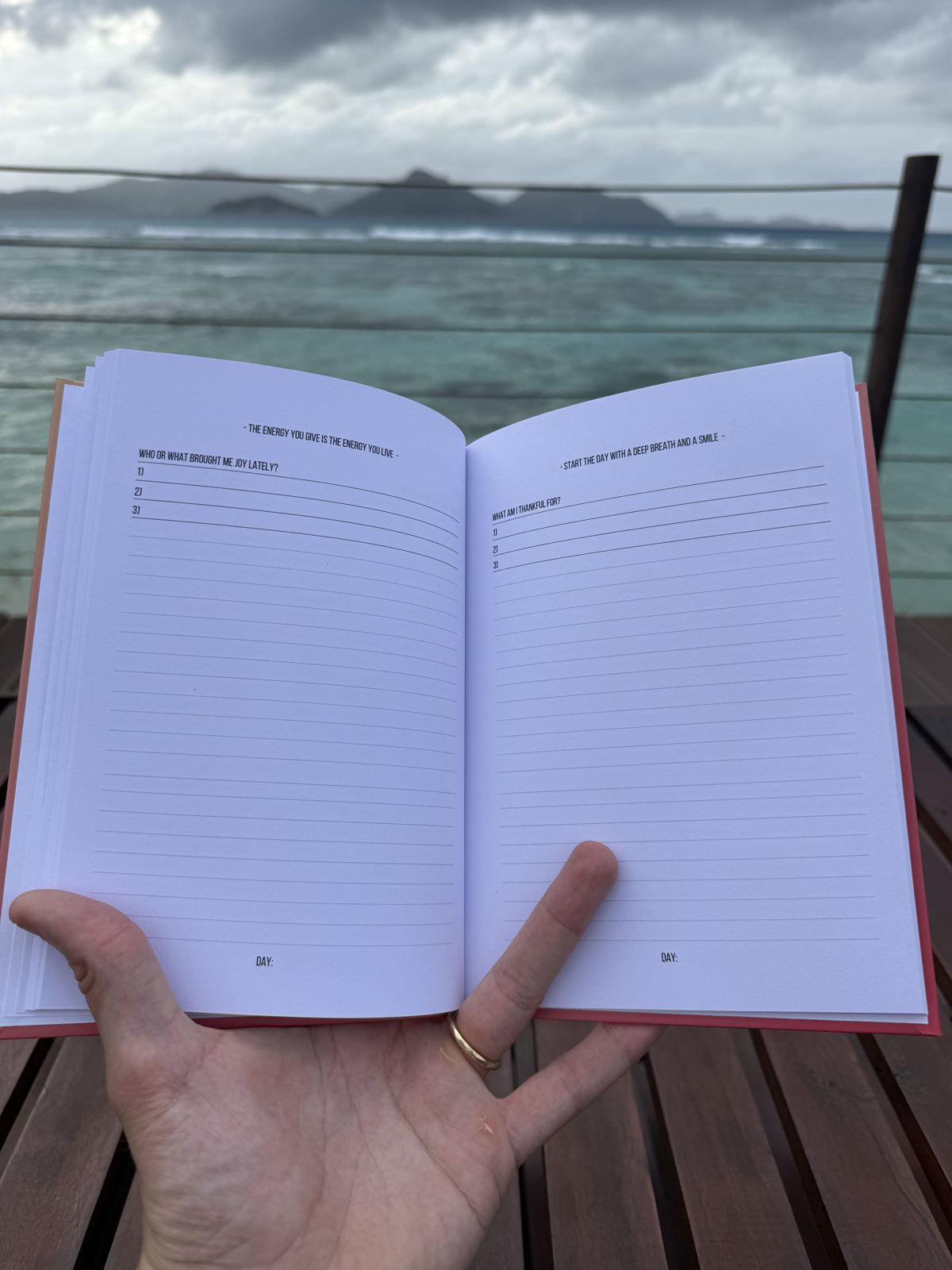
You can also mix reflection with useful notes. Put your three gratitudes beside your to-do list, or leave space for an idea that arrives later. The HOR-i-ZON journal combines a daily quote and gratitude lines with open lined space. It can be your everyday notebook, not another separate habit to manage.
4. Make restarting part of the habit
Missing a day does not erase the entries you have already written. Avoid turning a gap into a backlog. You do not have to reconstruct every missed moment before you can continue. Open the next page and write about today. An undated journal leaves that choice with you.
If you keep avoiding the notebook, adjust the routine instead of judging yourself. Try a different time, a shorter entry or fewer writing days. A practice that fits three evenings a week may be more useful than a daily plan you dread. You are allowed to find your own rhythm.
5. Notice what makes it worth returning
After a few entries, ask what helped. Did making a list clear your head? Did writing about a good moment make it easier to remember? Did you spot a problem you want to talk through with someone? Let those answers guide what you write next, rather than following a rigid template.
Keep your pages as private as you need them to be. You do not have to share them or make them look good in a photo. Today, try one sentence and one thing you appreciated. Close the journal when you are done. That is a real beginning, even if it only took two minutes.