
Why gratitude journaling works
2 November 2026 · 4 min read
Three lines a day can change what your mind notices. Here is why.
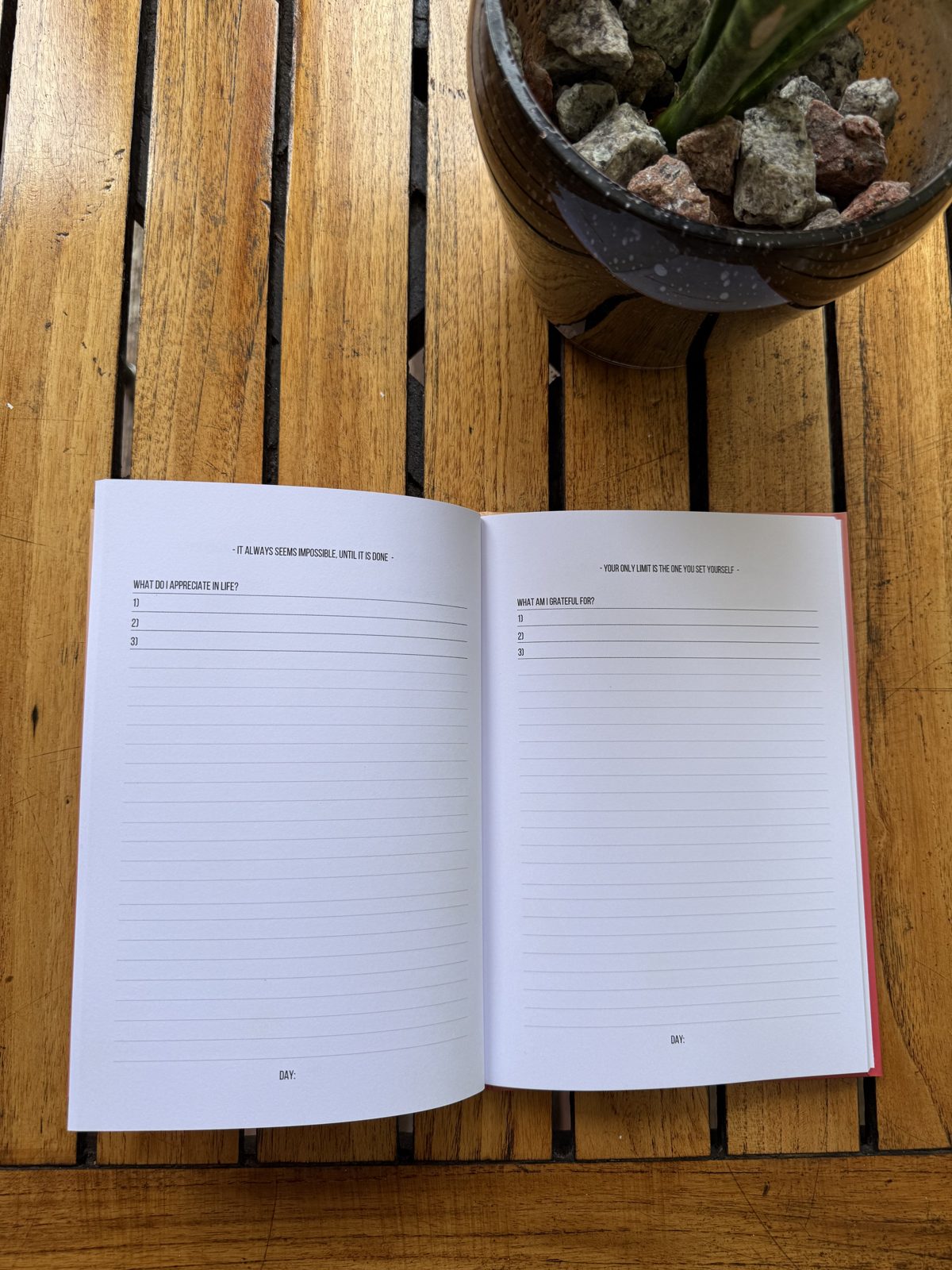
Why the good moments are easy to miss
You get home after a long day. One awkward conversation keeps replaying in your head, while the friendly message, the delicious lunch and the quiet walk have already faded. Nothing is wrong with you. Difficult experiences often ask for more of our attention than ordinary pleasant ones.
Gratitude journaling gives those quieter moments somewhere to land. It is not about convincing yourself that everything is wonderful. It is about recording a fuller picture of your day, including the parts you might otherwise forget. A few honest lines can be enough to begin.
What writing adds to noticing
Thinking ‘that was nice’ takes a second. Writing down what happened asks you to pause and choose words. You remember the person who held the door, the first sip of coffee or the relief of finishing a task. That little pause gives the experience more room than a passing thought does.
Research on gratitude practices suggests they can support wellbeing for some people, although results vary and the effects are not a promise. You do not need to treat your journal as a self-improvement experiment. A useful first question is simply: does this help me notice something worth keeping?
Make your three lines specific
‘I am grateful for my friends’ is a perfectly good start. But ‘My friend remembered my interview and asked how it went’ tells a story. Specific entries are easier to connect with when you return to them. Try naming the moment, then adding why it mattered to you.
Your three lines might be: ‘The tram arrived just as I reached the stop, so I could take my time.’ ‘My colleague helped me untangle a problem without making me feel silly.’ ‘I cooked something simple and actually sat down to enjoy it.’ Small is not less meaningful. Your journal does not need an extraordinary day.
Leave room for difficult days
Gratitude and frustration can share a page. You can write that you feel overwhelmed and also appreciate a kind conversation. One does not cancel the other. Avoid using a grateful thought to argue yourself out of sadness, disappointment or anger. Those feelings deserve space too.
If three things feel impossible, write one. If even one feels forced, describe something neutral: a warm shower, a familiar song, a place to rest. Or leave the page for another day. Journaling is a personal practice, not treatment, and it does not replace support from a qualified professional when you need it.
A gentle way to begin this week
Choose a moment that already exists in your day, such as after brushing your teeth or before turning out the light. Keep a pen with your journal. Write up to three things you appreciated and stop there if you want to. You are building a place to return to, not a perfect writing streak.
After a week, read a few entries. Look for what repeats: people, time outdoors, small accomplishments or moments of rest. Those patterns can tell you what you value. In the HOR-i-ZON journal, the gratitude lines sit alongside space for your everyday notes, so the good moments can live right next to the rest of your life.